Nicki Minaj Tells UN Christians in Nigeria Are Being Driven From Their Homes and Killed
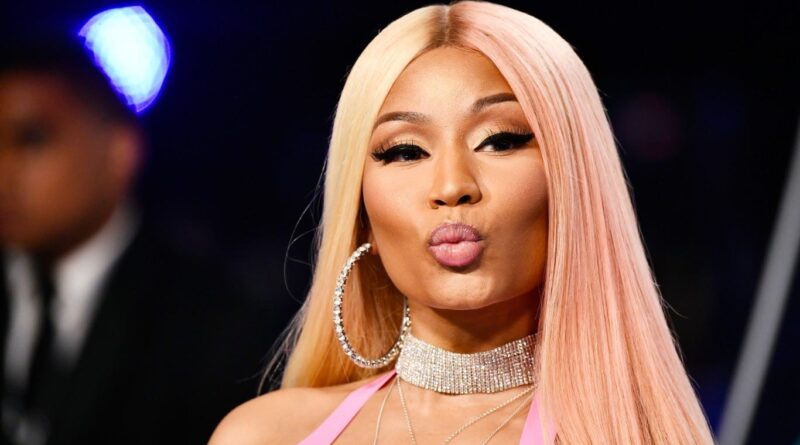
American rapper Nicki Minaj has generated major attention after telling a United Nations audience that Christians in Nigeria are being forced from their homes and killed. She made this statement on Tuesday during a U.S.-organised event that focused on religious violence, global insecurity, and the safety of Christian communities in different parts of the world. According to Minaj, “Christians in Nigeria are being targeted,” and she added that churches have been burned and families destroyed “simply because of how they pray.” Her comments immediately spread across social media, sparking reactions from Nigerians both at home and abroad.
Minaj explained that her intention was not to divide Nigerians or create tension between religious groups. Instead, she said she wanted people to pay attention to the human suffering taking place in communities affected by violence. She stressed that Nigeria is a “beautiful nation with deep faith traditions,” and she noted that she has a strong Nigerian fanbase, the “beautiful Barbz,” whom she considers part of her global family. She emphasized that speaking up for victims is “not about taking sides,” but about showing concern for humanity and working to end injustice.
Standing beside U.S. Ambassador to the UN, Mike Waltz, Minaj thanked former U.S. President Donald Trump for “prioritizing this issue.” Her remarks came just days after Trump made global headlines by declaring that he would send American troops into Nigeria “guns a-blazing” if the Nigerian government “continues to allow the killing of Christians.” Trump had also recently labelled Nigeria a “country of particular concern,” pointing to reports of deadly attacks in parts of the North where armed groups have raided villages, burned homes, and killed residents. His comment added another layer of international pressure on Nigeria’s security agencies.
However, the Nigerian government strongly disagrees with the claims of religious persecution. Officials from the presidency say the violence facing the country is not targeted at a specific religion. They argue that Muslims, Christians, farmers, herders, and various ethnic groups are all affected by the insecurity caused by banditry, terrorism, land disputes, and criminal gangs. According to them, the conflict is far more complex than a simple story of Christians versus Muslims. Government spokespersons insist that the insecurity comes from long-standing issues such as competition for land and water, rural poverty, weak policing, and attacks by armed groups whose motives are not always religious.
Security experts support this view, saying that the crisis should be described as a mix of terrorism, armed conflict, and communal violence. They warn that simplifying the situation as a purely religious problem could inflame tensions and make the country more unstable. Analysts note that in many states—especially in Northern Nigeria—both Muslim and Christian households have suffered attacks. Homes have been destroyed, people displaced, and entire communities left with little protection. According to them, any foreign comment that does not reflect the full complexity of the issue may create confusion or lead to dangerous misunderstandings.
Despite this, Minaj’s comments have gained wide attention in the U.S. and online. Ambassador Waltz publicly thanked her for “leveraging her massive platform” to spotlight what he called “atrocities against Christians in Nigeria.” He said her global influence had amplified a conversation that many U.S. policymakers have been trying to bring to the forefront of international discussions. Many American conservatives see Nigeria’s insecurity as a religious crisis, and Minaj’s speech appears to support their narrative.
Back in Nigeria, online reactions have been deeply divided. Some Nigerians welcomed Minaj’s concern, saying it was good for influential global figures to highlight the suffering in communities that armed groups have attacked. Others argued that Minaj may not have the full picture and that her statement could cause unnecessary fear or tension. Many users pointed out that both Christians and Muslims have lost relatives to banditry, kidnappings, and terrorism, and that what Nigeria needs is accurate reporting rather than simplified narratives.
Are Christians in Nigeria being targeted exactly the way Nicki Minaj described?
Answer:
Some Christian communities have been attacked, but experts say Nigeria’s insecurity is not limited to one religion. Both Muslims and Christians have suffered from terrorism, land conflicts, and criminal operations. The situation is complicated, involving many factors such as banditry, poverty, ethnic clashes, and weak security structures—not just religious persecution.
Tips and Recommendations
Nigerians should verify sensitive security information before sharing it online.
Community leaders and citizens are encouraged to keep calling for better security responses from state and federal authorities.
International speakers should consult verified reports before making strong public claims.
Nigerians can support peace-building initiatives, community dialogue, and inter-faith cooperation to reduce tension.
Individuals should stay informed through reliable news sources and avoid spreading fear-based narratives.