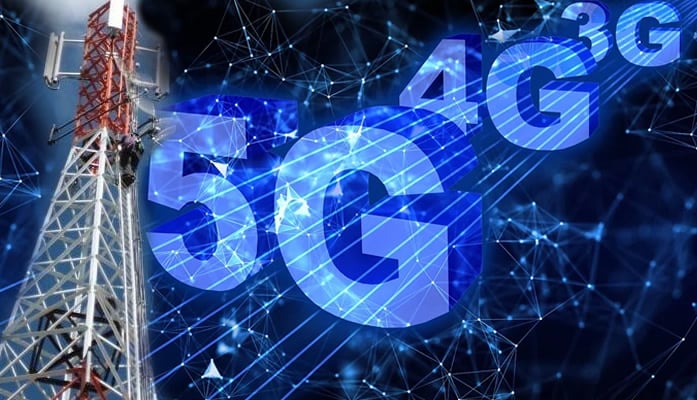
Nigeria has over 170 million mobile subscribers, yet many people with 5G phones still cannot use 5G services. Recent data from the Nigerian Communications Commission shows that only about 5 million users, which is just around 3%, currently have access to the 5G network. This means most Nigerians who own 5G-capable devices cannot connect to the network at all.
When 5G was first introduced, many believed it would change communication, streaming, business, and online services. However, almost five years after discussions about 5G started in Nigeria, the excitement has reduced. The rollout has been slow, and many areas still do not have any 5G coverage even though people already bought devices prepared for the technology.
MTN launched the first commercial 5G network in September 2022, and within the first five months, about 60,000 users were connected. By May 2023, MTN had extended coverage to 13 cities, but many of these areas still had limited signals. Airtel later joined in June 2023, launching 5G in Lagos, Ogun, Abuja and Rivers States. Meanwhile, another licence holder, MAFAB Communications, has not made noticeable progress.
One of the biggest challenges affecting 5G adoption is the high cost of 5G-enabled phones and the low availability of affordable devices. Many Nigerians cannot afford these phones, making it harder for the technology to spread quickly. Another major issue is the poor fiber optic network in the country. Fiber cables are needed to support strong and reliable 5G coverage, but many cities and rural areas do not have enough.
A recent joint report by Ookla and the Nigerian Communications Commission found that 70% of 5G devices in Lagos cannot connect to any 5G network. In Abuja, about 65% of 5G phones also cannot connect. This shows that ownership of 5G phones is increasing faster than the network coverage itself. As a result, many users have phones that are more advanced than the networks available to them.
The report also noted major differences between cities with active network expansion and rural communities still using mostly 2G and 3G. This imbalance continues to limit digital access, online work opportunities, and technology growth outside large urban areas. The NCC says it plans to speed up deployment and expand 4G and 5G networks into underserved regions to close the gap.
What is the main reason many Nigerians with 5G phones still cannot use 5G?
The main reason is that network coverage is still very limited, meaning the signal is not available in most areas, even though many users already own 5G-capable devices. This makes phone readiness higher than network readiness.
While Nigeria struggles with slow expansion, the challenge is not unique. Across Africa, only about 1.2% of the population has access to 5G. However, experts believe this will grow over time, with projections suggesting wider adoption by 2030. Countries like China, however, have already made massive progress, with more than 1.14 billion 5G users recorded by late 2025.