FG Allocates Less Than 1% of 2026 Budget to Fight Poverty
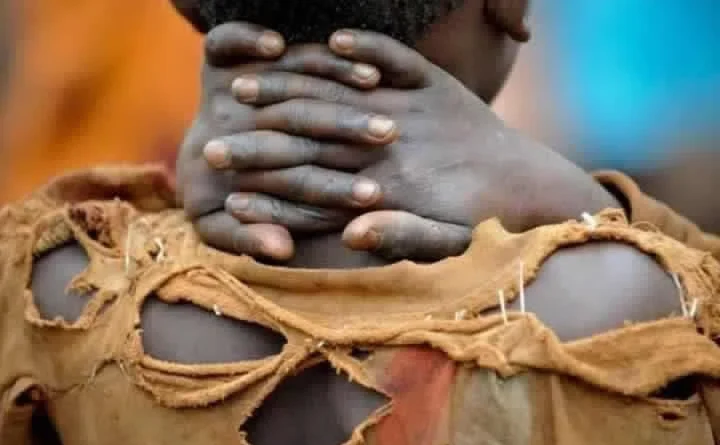
The Federal Government of Nigeria plans to spend about N206.5 billion on poverty alleviation projects in its 2026 budget, representing less than one per cent of the total N58.47 trillion spending proposal submitted to the National Assembly.
Analysis of the 2026 Appropriation Bill shows that all projects directly linked to poverty reduction across ministries, departments, and agencies (MDAs), including the Service Wide Vote, total only N206.5 billion. This translates to about 0.35 per cent of the total federal budget and roughly 0.89 per cent of the capital budget of N23.21 trillion.
Most of the allocation comes from the Service Wide Vote, with two major recurrent items under the National Poverty Reduction with Growth Strategy (NPRGS) contributing N200 billion. This includes N100 billion for NSIP upscaling and N100 billion for other NPRGS recurrent programmes. This means that MDAs outside the Service Wide Vote account for only N6.5 billion in poverty-focused projects.
Among MDAs, the Federal Co-operative College in Ibadan has the largest allocation of N2.87 billion to provide tricycles and motorcycles to selected communities. The Centre for Management Development receives N840 million for SME empowerment, while the Board for Technology Business Incubator Centre in Abuja has N700 million for technology-based poverty reduction. Other significant allocations include Nigeria Stored Products Research Ilorin with N507.5 million and the Federal Co-operative College Oji River with N364 million for food supply and women’s empowerment initiatives.
Most poverty-focused projects across MDAs target three main areas: food distribution, provision of transport and empowerment tools, and skills or capacity building for women, youths, and SMEs. Smaller portions go into studies, symposiums, and technology incubation.
Despite the low overall allocation, the Federal Ministry of Humanitarian Affairs and Poverty Alleviation saw its budget rise from N7.1 billion in 2025 to N23.56 billion in 2026, mainly due to capital spending. However, some capital projects, such as office furniture, classroom construction, and ministerial retreats, were not directly linked to poverty alleviation.
Reports from the World Bank reveal that only 44 per cent of benefits from government social safety-net programmes actually reach poor Nigerians. Nigeria spends barely 0.14 per cent of its GDP on social protection, far below the global average of 1.5 per cent and the Sub-Saharan African average of 1.1 per cent, leading to minimal impact on poverty levels.
PwC projects that Nigeria’s poverty rate will rise sharply to 62 per cent by 2026, meaning about 141 million people will live below the poverty line. Weak income growth, rising inflation, and high living costs are expected to push more households into poverty, limiting domestic consumption and productivity growth.
Both PwC and the World Bank stress the urgent need for targeted interventions such as job creation, increased productivity, and effective social protection programmes. Without these measures, reducing poverty levels in Nigeria will remain a major challenge in the coming years.