Nigeria and China Strengthen Partnership to Boost Marine and Blue Economy
Nigeria and China have reaffirmed their commitment to strengthening cooperation in the marine and blue economy sector, with a focus on port development, vessel ownership, and new markets for Nigerian aquaculture products. The partnership is expected to open fresh opportunities for trade, investment, and job creation while positioning Nigeria as a key maritime hub in Africa.
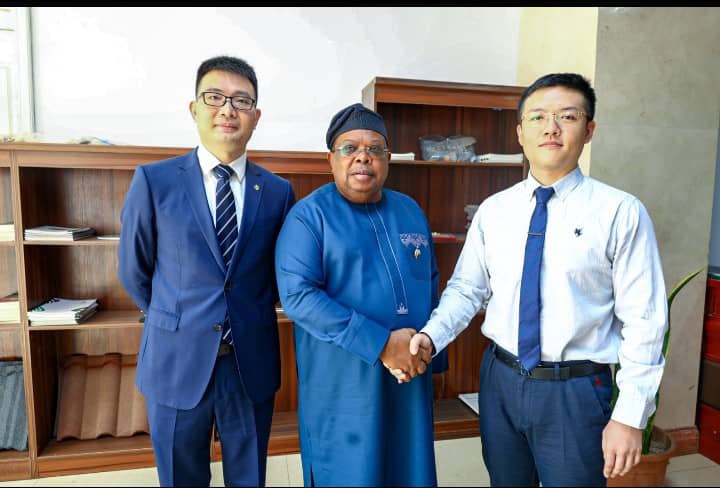
The development was confirmed during a meeting between Nigeria’s Minister of Marine and Blue Economy, Adegboyega Oyetola, and the Chinese Ambassador to Nigeria, Yu Dunhai, held at the ministry’s headquarters in Abuja. Both parties highlighted the potential of Nigeria’s maritime resources and agreed to collaborate on initiatives that will expand shipping, fisheries, port operations, and maritime training.
Oyetola noted that Nigeria is endowed with over 853 kilometers of Atlantic coastline and more than 10,000 kilometers of inland waterways, providing immense opportunities for marine activities. He stressed that Nigeria’s marine and blue economy could contribute significantly to national growth if harnessed effectively. According to him, “Nigeria has a lot to learn from China’s experience in building a successful blue economy. We are determined to put in place the right framework for investment, innovation, and sustainable partnerships.”
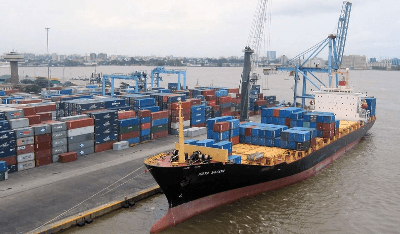
In response, Ambassador Yu Dunhai praised Nigeria’s vast maritime potential and pointed to the Lekki Deep Seaport as an outstanding example of China-Nigeria collaboration. The port, constructed by China Harbour Engineering Company, is capable of handling ultra-large container vessels and has already helped decongest Lagos ports while creating thousands of jobs. Yu added that such projects prove Nigeria’s readiness to become a major maritime hub in West and Central Africa.
A major highlight of the talks was China’s approval of zero tariffs on aquaculture exports from Nigeria. This will open the Chinese market to Nigerian fish farmers and seafood producers, boosting local industries while creating new streams of foreign exchange earnings. Yu confirmed that discussions are already underway for formal agreements that will make aquaculture exports a key part of Nigeria-China trade relations.
Beyond aquaculture and ports, Nigeria and China have also signed a $2 billion maritime investment deal. The initiative is designed to accelerate indigenous vessel ownership, improve freight capacity, and enhance maritime training. According to projections, the deal will deliver $2 billion in vessel investments, $20 billion in freight contracts for Nigerian operators, $200 million dedicated to training, and $50 million for new training vessels. This investment is expected to create more than 2,000 jobs annually and train over 25,000 globally certified Nigerian seafarers.
The agreement is not only about strengthening maritime trade but also about developing human capacity and building a self-sufficient local shipping ecosystem. Oyetola expressed confidence that the collaboration would unlock massive opportunities for Nigeria’s maritime industry while fostering stronger bilateral ties.
With these steps, Nigeria and China are setting the stage for a long-term partnership that could transform the future of Nigeria’s marine and blue economy. The move is also expected to improve trade routes, create jobs, and ensure that Nigeria plays a leading role in Africa’s maritime development.